Dr Eng Michał Piotrowski is a winner of the MINIATURA competition
The National Science Centre has included researchers from our faculty in the ranking list for the tenth edition of the MINIATURA competition. Their projects focus on antimicrobial chitosan coatings for textiles and flexible gel dosimeters for radiotherapy.
The primary objective of the MINIATURA competition is to help early-career researchers enter the grant system. The tenth edition was open to individuals who earned their doctoral degree between 2014 and 2026 and have at least one publication—either already published or accepted for publication—to their credit. Awardees receive between PLN 5,000 and PLN 50,000 to carry out a scientific project lasting up to 12 months.
Two researchers from the Faculty of Material Technologies and Textile Design at Lodz University of Technology appear on this year’s ranking list:
Dr Eng. Dominik Sikorski was awarded PLN 49,940 for his project titled "The relationship between the surface modification of TPP-crosslinked chitosan and its antimicrobial properties."
The research aims to develop and evaluate functional, biostatic chitosan coatings for textile applications-primarily for protective clothing, medical and veterinary use, and textiles that remain in prolonged contact with the skin. Due to their porous structure and capacity to retain moisture and organic compounds, textile products are highly conducive to the growth of microorganisms. This results in reduced comfort, unpleasant odours, and an increased risk of skin irritation and infection. The issue is particularly significant regarding medical and protective clothing, as well as patient bed linen.
Chitosan, a natural, biodegradable, and biocompatible polymer with known antimicrobial properties, is the suggested answer.
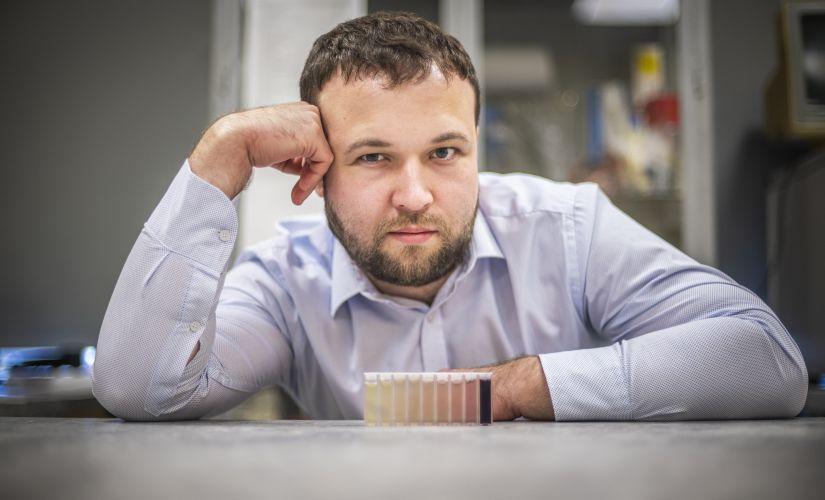
Dr Eng Michał Piotrowski has been awarded 49,929 PLN for a project titled "Deformable 2D Gel Dosimeter for Use in Radiotherapy."
The researcher aims to develop 2D gel dosimeters that could serve as in vivo dosimeters, placed on a patient's skin during radiation therapy. The work is divided into three stages: producing gel dosimeters with high mechanical and thermal strength, developing a method to coat them with a protective layer, and calibration.
The project will enable the creation of unique dosimetric systems and the characterization of their fundamental properties. It will also serve as a foundational step for future research projects.
Congratulations!